
Advances · July 19, 2026 · 6 min · By Lazlo Fontaine
PRP vs hair transplant: which one fixes hair loss?
One strengthens the follicles you still have; the other relocates new ones. How to tell which procedure your stage of hair loss actually needs.
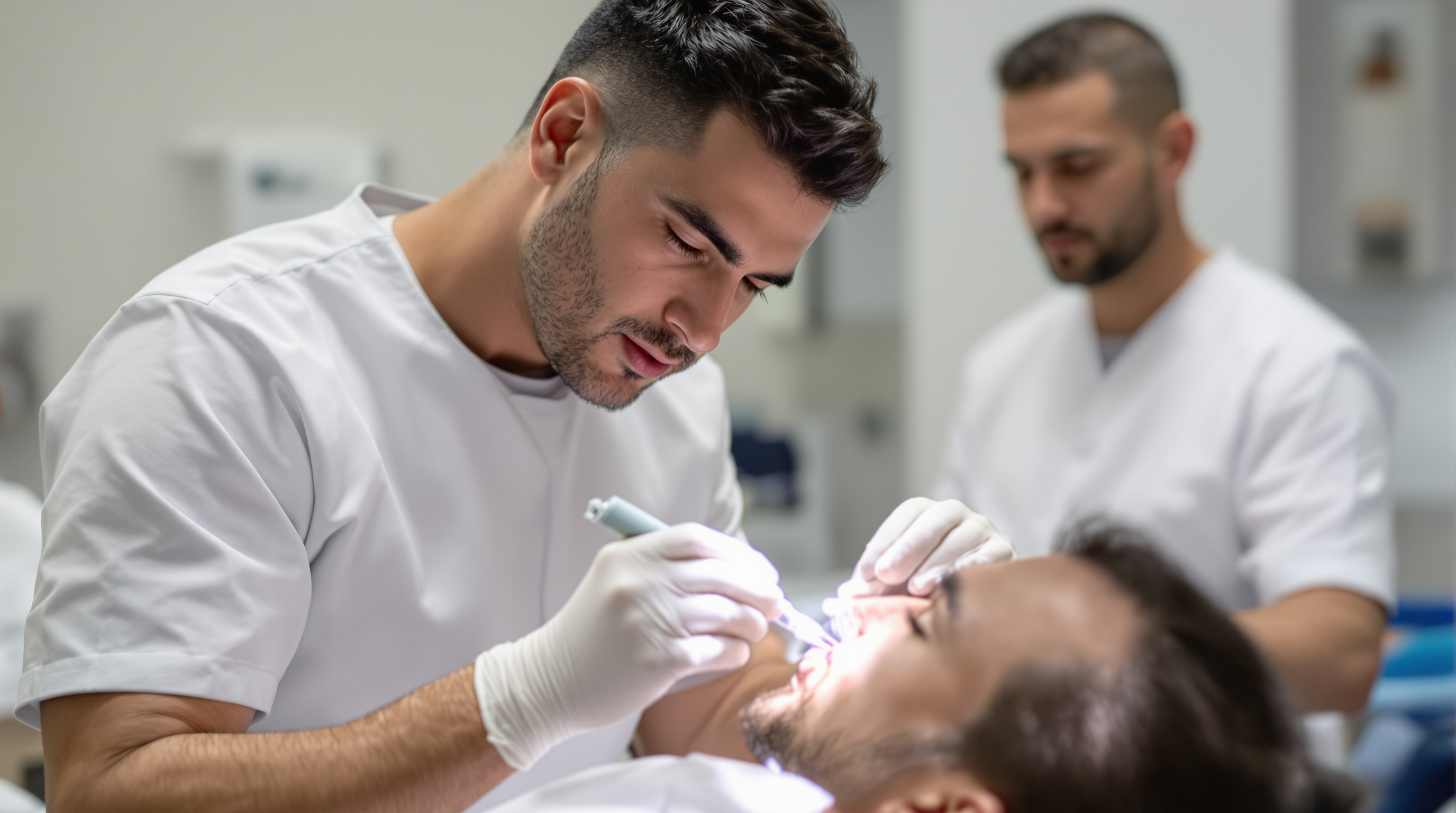
Ask anyone researching hair loss long enough and the question crystallizes into a choice between two very different procedures: a course of PRP for hair loss or a surgical hair transplant. They get lumped together because both promise more hair, but they are not competing versions of the same treatment. One tries to strengthen the follicles you still have. The other physically moves follicles from one part of your scalp to another. Understanding that difference is the whole decision.
What each procedure actually does
PRP is a nonsurgical injection treatment. A small amount of your blood is spun in a centrifuge, and the concentrated platelets and their growth factors are injected into the thinning scalp to revive follicles that are miniaturizing but still alive. It adds no new hair. It defends and thickens what remains, which is why it works best on early, diffuse thinning and does nothing for skin that is already smooth and bald.
A hair transplant is surgery. A surgeon harvests healthy, DHT-resistant follicles, usually from the back of the scalp, and relocates them into bald or thinning zones, where they continue to grow permanently. Because it relocates living follicles, a transplant can restore hair to areas where nothing grows anymore, something PRP simply cannot do. The American Academy of Dermatology notes that modern transplants move follicles in small, natural-looking groupings to rebuild a believable hairline (AAD).
Where each one wins
The dividing line is how far your loss has progressed. For early thinning, a widening part, or a crown that is losing density but still has fine hair, PRP is the sensible first move: low-risk, no surgery, and genuinely useful for holding and thickening the hair you have. Controlled trials in androgenetic alopecia have measured real gains in density and shaft thickness after a standard injection series (PubMed).
For an established bald patch, a receded hairline, or a shiny crown with no follicles left to rescue, PRP has nothing to work on, and a transplant is the only intervention that can put hair there. Mayo Clinic frames surgery as the option for permanent, patterned loss once medical treatments have done what they can (Mayo Clinic).
Why it is rarely either or
The framing that trips people up is treating this as a permanent fork in the road. In practice the two are often sequenced. Many people start PRP early to slow the slide, keep it going for years, and only consider a transplant if and when the loss outpaces what injections and medication can hold. And after a transplant, PRP is frequently used as an adjunct: to support graft healing and to protect the native, untransplanted hair around the new grafts, which keeps thinning on its own timetable.
That native hair is the quiet reason a transplant alone can disappoint. Surgery relocates permanent follicles, but it does nothing to stop the original genetic thinning in the hair you were born with. Without ongoing medical treatment, a person can end up with transplanted hair standing in a field that keeps thinning around it. This is the same logic behind pairing PRP with minoxidil and finasteride: the procedures address different parts of the same problem.
The cost and commitment are different shapes
PRP is a recurring expense. It is a series of sessions plus maintenance a few times a year, which means you are budgeting a smaller amount indefinitely, a structure we break down in what PRP costs and how to judge the value. A transplant is a large one-time cost with a real recovery, but the relocated follicles are permanent and do not need reinjecting.
Durability differs too. Transplanted grafts are for keeps; PRP's gains fade without upkeep, as we cover in how long PRP results last. Neither fact makes one universally better. They make each one suited to a different stage and a different budget.
How to actually decide
Match the tool to the stage. If your thinning is early and diffuse and you want to protect what you have without surgery, start with PRP, ideally alongside proven medication. If your loss is advanced, patterned, and you want hair where there is currently none, a transplant is the procedure that can deliver it, and PRP becomes a support act rather than the main event. A surgeon who recommends transplanting a scalp that still has salvageable follicles, or a clinic that promises PRP will regrow a bald crown, is overselling in opposite directions.
The honest takeaway is that PRP and hair transplants are not rivals but tools for different points on the same timeline. PRP defends the hair you have; a transplant replaces the hair you have lost. The best plans often use both, in sequence, and start early enough that you get to choose rather than scramble. Before committing to either, get a real diagnosis and a candid read on how much salvageable hair you still have.
Related reading: Does PRP work for hair loss?.