
Field Notes · September 20, 2025 · 6 min · By Jefferson Aluko
What is PRP therapy, really?
Platelet-rich plasma, the science underneath the buzzword, and why it shows up in so many different treatments.
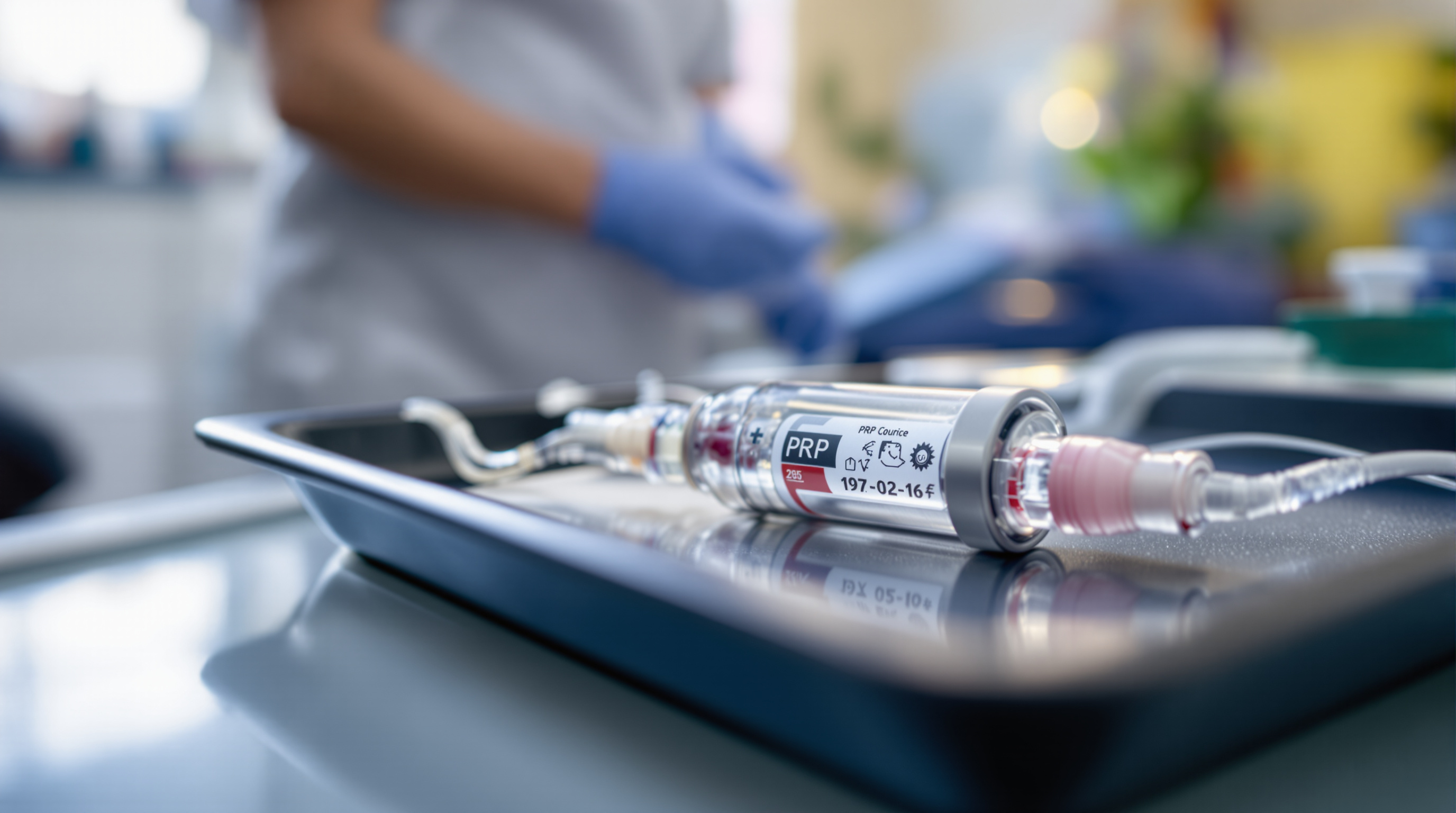
PRP therapy is one of those phrases that has spread far faster than most people's understanding of it. Strip away the marketing and it is a simple idea: take a small amount of your own blood, concentrate the platelets, and put that concentrate back where the body needs a repair signal.
Platelets are best known for clotting, but they also carry a payload of growth factors that orchestrate tissue healing. When you spin blood in a centrifuge, you can separate out a layer rich in those platelets, the platelet-rich plasma. Injecting or microneedling that concentrate into a wound, a thinning scalp, a tired face, or an arthritic knee is meant to amplify the body's own repair machinery rather than introduce a drug.
That is the appeal and the catch in one sentence. Because PRP is autologous, made from you, it sidesteps allergy and rejection concerns and carries a clean safety profile. But because it is your own biology doing the work, results are gradual, variable, and heavily dependent on the condition being treated and the quality of the preparation. Understanding PRP means understanding that it is a healing accelerant, not a magic injection, and that its value changes dramatically depending on what you point it at. The rest of this journal works through those uses one at a time, starting with the one where the evidence is strongest in our piece on PRP for hair loss.
Related reading: PRP for knees, joints, and arthritis.
Further reading: Platelet-rich plasma and corticosteroid injection for tendinopathy: a systematic review and meta-analysis (BMC Musculoskelet Disord 2025); Platelet-rich plasma (PRP) treatment of the ovaries significantly improves fertility parameters and reproductive outcomes in diminished ovarian reserve patients: a systematic review and meta-analysis (J Ovarian Res 2024); Autologous platelet-rich plasma for assisted reproduction (Cochrane Database Syst Rev 2024).